
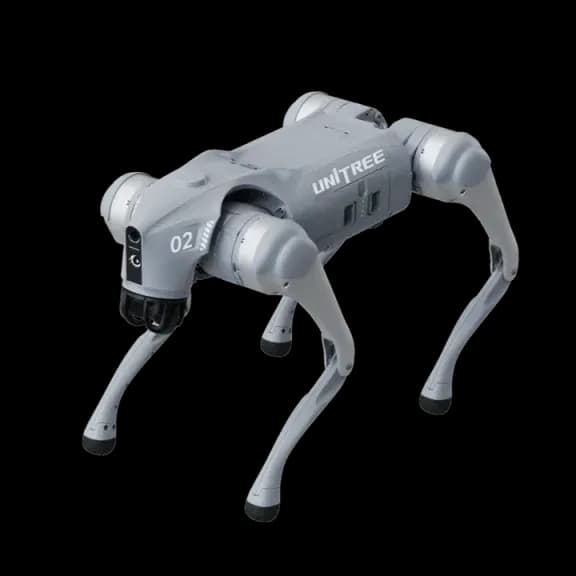
Unitree Go2
Go2
15kg / up to 5 m/s / SDK on Edu
Solution Blueprints
A platform to work with and a machine to develop against, with the limits of what that gets you stated plainly.
Worth being plain at the start, because it is the thing most often glossed over: buying a robot is not buying a capability. These are development platforms. The chassis is the solved part, and the work that remains is the policy, the perception and the integration with whatever the machine is meant to do. Anyone buying one to perform a specific task should specify the task first, and we will say honestly whether this is the right answer.
Where a group starts is usually the Go2, and the variant matters more than the model. At 15kg and about 70cm it is a machine one person carries, sets up and can afford to damage, which is what a teaching or early research platform has to be. The Edu variant is the one to buy for any real development: full SDK access, force sensing and up to 12kg payload. Choosing the base unit and then needing Edu is the common and expensive mistake.
The two larger platforms answer different questions. The G1 is a 35kg humanoid with 23 degrees of freedom that folds to 690mm, and its joints are the part to read: industrial crossed roller bearings and 90N.m at the knee, rising to 120N.m on the Edu, which is what separates a research machine from a demonstration piece. The B2 is the working one: 120kg maximum payload, 6 m/s, and over four hours of walking under a 20kg load, for inspection and carriage over ground a wheeled platform cannot cross.
Beside the robot goes the machine you develop against. A GB10 deskside carries 128GB of coherent unified memory, which is enough to train and evaluate a policy locally instead of queueing for cluster time, and it runs the same CUDA stack the deployed model will. For a group iterating daily on a policy, the turnaround time on that loop matters more than the peak throughput of anything in the building.
The Edu variant carries full SDK access and force sensing. Buying the base unit and then needing Edu is the expensive route to the same place.
128GB of unified memory on the desk trains and evaluates a policy locally, on the same CUDA stack the deployed model runs.
We supply the platforms and the compute. If the goal is a specific job done unattended, tell us the job and we will say whether this is it.
Go2
15kg / up to 5 m/s / SDK on Edu
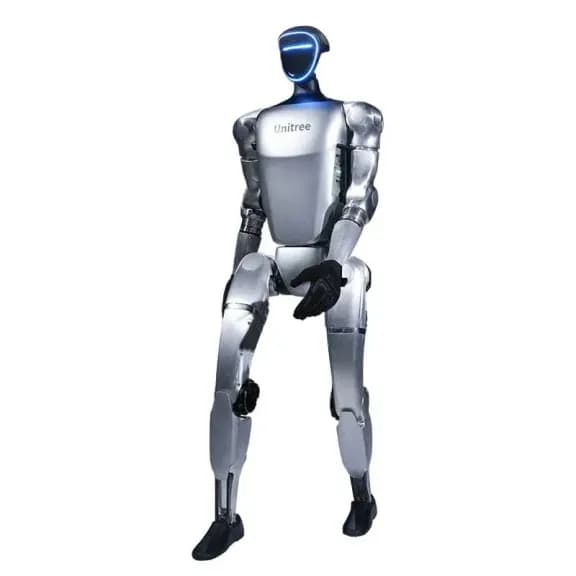
G1
23 DOF / 35kg / folds to 690mm
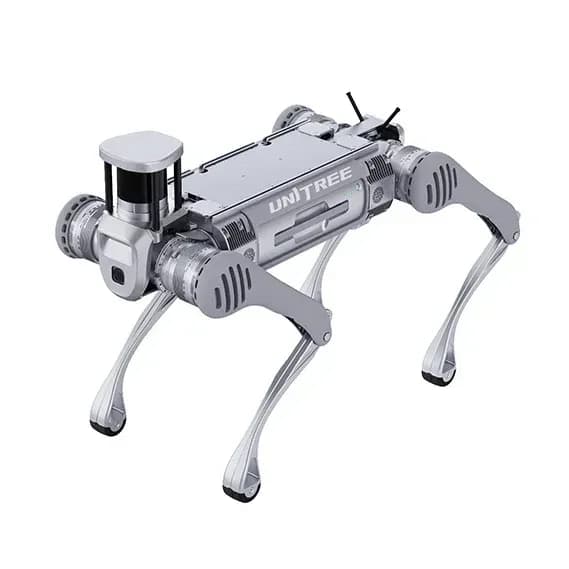
B2
120kg payload / 6 m/s / 4+ hours
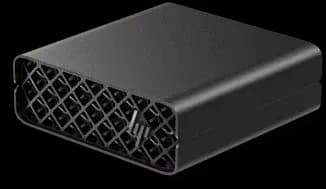
ZGX Nano G1n
GB10 Superchip / 128GB unified / 150mm chassis
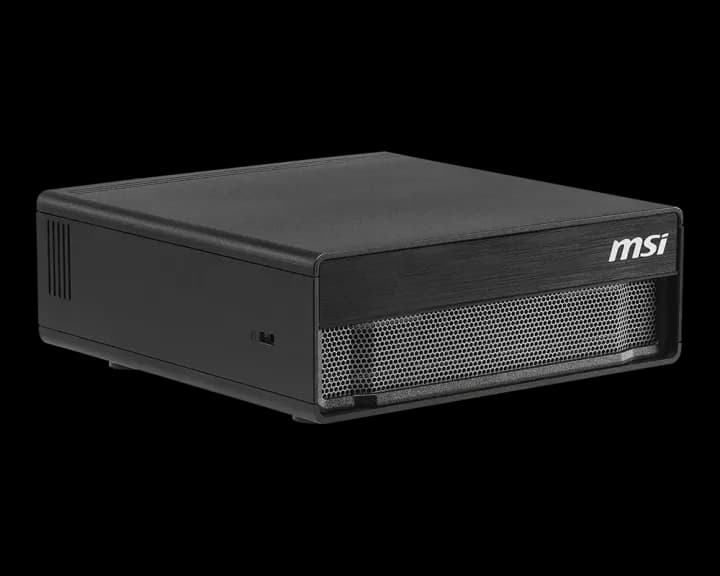
MS-C931
128GB LPDDR5X / 1 PFLOP FP4 / Edge ready
Tell us the workload and the power envelope you have to work within. We will come back with a configuration, a lead time and a written quote.